Customer reviews can make or break your business. Here’s why managing them effectively is critical:
- 57% of consumers avoid businesses that ignore negative reviews.
- Responding to reviews can boost revenue by 12%.
- AI tools help businesses respond faster - up to 30% quicker - while human oversight ensures sensitive issues are handled with care.
- Companies that combine AI efficiency with human judgment see better customer satisfaction and stronger reputations.
The best approach? Use AI for routine responses (like thanking customers) and reserve human input for nuanced or complex feedback. This hybrid strategy balances speed with a personal touch, helping you engage with customers while protecting your brand image.
Respond to Reviews using AI
Understanding AI Review Response Systems
In today's fast-paced digital world, balancing speed with a personal touch is essential for businesses managing online reviews. AI systems have become a key element in achieving this balance. Using natural language processing and machine learning, these tools analyze reviews, interpret sentiment, and create tailored responses across various platforms. For instance, they can pick up specific details like "chocolate chip cookies" from reviews, allowing businesses to deliver timely and relevant replies that feel personal and thoughtful.
Let’s dive into how AI tools are transforming review management.
How AI Tools Improve Review Management
AI tools bring efficiency and precision to review management by analyzing sentiment, selecting the right tone, and generating custom responses. Sentiment analysis goes beyond simply categorizing reviews as positive, negative, or neutral; it also evaluates the intensity of the feedback. This helps businesses prioritize urgent matters - ensuring that critical or emotional concerns are addressed quickly, while positive reviews receive timely acknowledgment.
Tone selection is another standout feature. AI systems ensure that every response aligns with your brand's personality, whether you aim for a professional tone or a more casual, friendly vibe. What sets these tools apart is their ability to craft unique responses based on the specific content of each review, rather than relying solely on generic templates.
These features also streamline multi-platform management. Tools like CommentAssist allow businesses to manage reviews from a single dashboard, reducing administrative workload and ensuring consistent messaging across platforms. Additionally, built-in analytics provide valuable insights into response times, recurring customer issues, and sentiment trends, helping refine and improve your approach over time.
Benefits of AI for US-Based Businesses
For US businesses, where customers expect quick and professional responses, AI tools are a game-changer. Most customers anticipate replies within 24–48 hours, but AI systems can draft responses in just minutes - even outside standard business hours - offering 24/7 availability.
Scalability is another major advantage. As your business grows, AI tools can handle an increasing volume of reviews without the need for additional staff. These systems are also tailored to meet US-specific standards, using American English conventions, formatting dates as MM/DD/YYYY, and incorporating dollar signs for currency. They can even include cultural nuances that resonate with American audiences.
For industries with specialized needs, such as healthcare, AI systems can generate HIPAA-compliant responses to safeguard sensitive information while addressing patient feedback. Similarly, they adapt to the unique communication styles required in fields like automotive, retail, hospitality, legal, and education.
The impact of AI review response systems is clear. Studies show that businesses using these tools can experience up to a 12% boost in customer engagement and a 10% improvement in online reputation scores. One client even reported a 40% increase in positive reviews after adopting an AI system. These results demonstrate how timely, thoughtful responses can elevate customer satisfaction and drive business growth.
Balancing Automation with Human Oversight
The best strategies for responding to reviews blend the efficiency and consistency of automation with the personal touch that only human insight can provide. This combination enables businesses to manage large volumes of reviews while maintaining genuine connections with their customers. Let’s break down when automation shines and when human involvement is essential.
When to Automate vs. When to Use Human Input
Knowing when to rely on AI and when to step in with human expertise is key to balancing efficiency and maintaining authenticity. The decision often hinges on the complexity of the review.
Automation works well for straightforward, predictable interactions. Tasks like thanking customers for positive reviews, responding to common compliments, or answering simple questions about business hours or services are ideal for AI. Neutral reviews that provide basic feedback can also be managed effectively by automation.
For instance, if a customer leaves a glowing five-star review saying, "Great food and fast service!", an AI system can effortlessly craft a response like, "Thank you so much for the wonderful review! We're thrilled you enjoyed your experience and look forward to serving you again soon."
Human input becomes necessary for reviews that involve nuanced emotions, detailed complaints, or sensitive issues. Research shows that businesses using a mix of automation and human oversight experience a 30% reduction in response times while maintaining higher customer satisfaction compared to fully manual processes.
Scenarios requiring human intervention include:
- Legal matters, health and safety concerns
- Allegations of discrimination or harassment
- Requests for refunds or compensation
- Reviews with highly emotional or angry language
- Feedback from repeat customers or influential community members
Keeping a Human Touch with AI Tools
Even when using AI for routine responses, it’s possible to maintain a warm and personal tone by customizing the system to reflect your brand’s unique personality. The goal is to make AI-generated replies feel sincere, not robotic or generic.
Start by tailoring templates to match your brand voice. For example, a casual café might adopt a friendly, conversational tone, while a law firm would lean toward a more professional style. Tools like CommentAssist allow businesses to adjust templates to reflect their voice and incorporate local nuances that resonate with American audiences.
Personalization matters. AI can reference specific details from reviews, such as mentioning the "chocolate chip cookies" a customer raved about. This small touch shows customers their feedback was genuinely noticed and appreciated.
Many businesses choose flexible levels of automation to maintain authenticity. For instance, some automate responses to clearly positive reviews while requiring human approval for neutral or negative ones. Others use AI to draft responses that humans can review and refine before posting. This hybrid approach ensures efficiency without sacrificing quality.
Regular human oversight is essential, even for automated responses. Assign team members to periodically review AI-generated replies, ensuring they align with your brand’s values and maintain a natural tone. This practice keeps the system on track and ensures a seamless mix of efficiency and authenticity.
Ensuring Quality and Authenticity
To maintain high-quality responses, consistent monitoring and updates to your AI system are crucial. Without proper oversight, even the most advanced AI can drift from your brand’s standards or overlook important cultural nuances.
Auditing should be a regular practice. Review a random sample of AI-generated responses weekly or monthly to check for tone, accuracy, and appropriateness for U.S. audiences. Make sure responses use proper American English, format dates as MM/DD/YYYY, and correctly reference dollars with the $ symbol when discussing prices.
Key metrics to monitor include response tone, brand consistency, customer satisfaction, and any complaints about automated replies. If issues arise, adjust the AI’s training data or templates to address them.
AI responses should reflect a friendly yet professional tone, characteristic of American communication. They should promptly acknowledge customer concerns and, when necessary, offer clear, actionable solutions.
Regular updates to response templates ensure they stay relevant. As your business evolves, templates should reflect new offerings, seasonal changes, or updated policies. Reviewing templates quarterly helps keep responses accurate and aligned with current business priorities.
Training your team is just as important. Staff responsible for overseeing AI responses should be familiar with your brand voice, know when to step in, and feel confident editing automated drafts. Clear escalation procedures ensure sensitive reviews are handled by the right people quickly.
By auditing and refining your approach, you can boost engagement and build a stronger online reputation. For example, one accounting firm shared:
"We've seen a 40% increase in positive reviews since implementing CommentAssist. The AI responses are always professional and helpful." - Jennifer Adams, Principal at Adams Accounting
This balanced approach of combining AI efficiency with human oversight creates a system that grows alongside your business while keeping the personal connections that foster customer loyalty intact.
Creating an Effective Review Response Strategy
Crafting a solid review response strategy means finding the right balance between technology and human insight. The best strategies combine automation for efficiency with human oversight to ensure responses feel genuine and thoughtful.
Step-by-Step Guide to Building Your Strategy
Start by selecting an AI tool that can analyze review sentiment and generate responses in your brand's tone. Look for platforms with customizable templates specific to your industry. For instance, CommentAssist provides smart reply suggestions tailored to your voice, while still allowing you full control over what gets published.
Next, train your AI using past reviews, FAQs, and examples of ideal responses. For businesses in the U.S., this involves ensuring the AI understands American English, uses the correct date format (MM/DD/YYYY), references dollars with the $ symbol, and reflects cultural nuances that resonate with your customers.
Decide when to rely on automation versus human input. Simple thank-you messages can be fully automated, but more complex complaints or sensitive issues should involve human review. Many businesses use a hybrid model where the AI drafts responses and humans approve them before posting. Tools like CommentAssist streamline this process with features like one-click approval.
Set clear response goals. Aim to reply to reviews within 24–48 hours, with critical feedback addressed even faster. AI tools can help you meet these timelines by drafting replies almost instantly, without compromising quality.
Finally, make sure to integrate all your review sources. For example, connect your Google Business Profile and other platforms so reviews are automatically pulled in daily. This ensures you never miss critical feedback and can respond promptly.
Once your strategy is in place, the next step is measuring its success.
Measuring Success with Analytics
Tracking the impact of your review response process is essential. Start by monitoring your response rate - your goal should be to reply to 100% of reviews. Studies show that businesses responding to reviews see, on average, a 12% increase in revenue.
Customer satisfaction scores can give you deeper insights into how well your responses are resonating. Keep an eye on changes in your overall review ratings, and use sentiment analysis to understand the tone of customer feedback. Post-interaction surveys can also help gauge whether customers feel heard and valued.
Engagement with your responses can boost your visibility on platforms like Google Maps, making it easier for potential customers to find you. Additionally, tracking response times for different types of reviews can reveal bottlenecks in your process and suggest areas for improvement.
If you're using CommentAssist, its built-in analytics dashboard makes it simple to monitor these metrics. It provides actionable insights into response trends and the overall effectiveness of your strategy.
Using CommentAssist for Your Goals
The strategy outlined above relies on blending AI efficiency with human oversight, and CommentAssist is designed to make that balance easy to achieve. Its customizable templates ensure every response matches your brand's tone while meeting the expectations of U.S.-based customers.
Collaboration tools allow your team to review, edit, and approve responses before they go live, ensuring sensitive reviews get the attention they deserve without slowing down the process. The one-click approval system speeds up publishing AI-generated replies without sacrificing quality.
With 24/7 monitoring, CommentAssist automatically pulls new reviews from connected platforms daily. It uses sentiment analysis to prioritize urgent issues, making it easier to address critical feedback quickly. Plus, its support for unlimited review responses means your business can manage reviews at scale.
For businesses needing more tailored solutions, CommentAssist offers API access and dedicated account management through its Enterprise plan. This includes custom integrations and a dedicated manager to help meet your specific needs.
Pricing starts at $29/month and goes up to $199/month, making it accessible for businesses of all sizes. By combining CommentAssist's tools with human expertise, you can safeguard your reputation and build stronger relationships with your customers.
sbb-itb-5375359
Comparing AI, Human, and Hybrid Approaches
Choosing the right response strategy depends on factors like your business size, the number of reviews you receive, and what your customers expect. Each approach - AI-only, human-only, and hybrid - comes with its own set of strengths and challenges, which can significantly shape your online reputation and customer relationships. Let’s break down how these methods stack up.
AI-only strategies are perfect for businesses handling a high volume of reviews, such as large retail chains or e-commerce platforms. They provide instant responses with a consistent brand voice, making them ideal for managing feedback at scale. However, AI might struggle with emotional subtleties or cultural nuances, which human responders naturally understand.
Human-only approaches shine when it comes to managing sensitive, complex, or highly personalized feedback. This method is often preferred by boutique businesses, luxury services, and healthcare providers, where customers value a genuine, personal connection. Human responders can interpret subtle cues and craft empathetic replies, but this comes at the cost of slower response times and higher expenses as the number of reviews grows.
Hybrid strategies offer a middle ground, blending the efficiency of AI with the emotional intelligence of human responders. AI can handle routine tasks like thanking customers for positive reviews, while more complex or negative feedback is passed on to a human team. This approach ensures that most reviews are addressed quickly, while sensitive matters receive the thoughtful attention they deserve.
Strengths and Limitations of Each Approach
| Criteria | AI-Only | Human-Only | Hybrid Approach |
|---|---|---|---|
| Speed | Very fast (instant) | Slow to moderate | Fast for routine; thoughtful for complex cases |
| Scalability | Highly scalable | Limited by team size | Scalable with human oversight |
| Personalization | Moderate (template-based) | High | High for complex cases |
| Consistency | Very consistent | Variable | Consistent with human refinement |
| Complex Issues | Limited understanding | Excellent | Excellent (human input) |
| Cost | Low to moderate | High | Moderate |
| Authenticity | Moderate | High | High for key interactions |
For businesses with limited resources but high review volumes, AI-only strategies are a practical choice where speed and consistency matter most. On the other hand, human-only approaches are better suited for businesses where building strong, personal connections is essential - think high-end restaurants, luxury hotels, or medical practices.
In the U.S., many businesses lean toward hybrid models because they strike a balance between efficiency and the personal touch customers expect. Tools like CommentAssist make this approach even more achievable by allowing AI to draft responses, which humans can then review and approve. This workflow ensures quick, high-quality replies without compromising on authenticity.
Ultimately, the best choice depends on your priorities. High-volume businesses may prioritize AI for its efficiency, while companies focused on relationships will lean on human insight. For many, a hybrid approach provides the ideal mix of speed, cost-effectiveness, and genuine customer care.
Setting Up CommentAssist for Review Management
To get started with CommentAssist, you’ll need to create an account, link your review platforms, and set up user permissions for your team. It’s also important to ensure your setup complies with local formatting standards for US businesses. This initial configuration is key to building an efficient and compliant system for managing reviews.
Choosing the Right Plan for Your Business
Pick a CommentAssist plan that fits your monthly review volume and business needs:
- Starter Plan ($29/month): Handles up to 100 reviews per month. Includes basic AI-generated responses, Google Business Profile integration, and email support. Perfect for small businesses like local restaurants or boutique shops working to grow their online presence.
- Professional Plan ($79/month): Designed for up to 500 reviews monthly. Offers advanced features like custom response templates and team collaboration tools, along with integration for both Google and Yelp. Ideal for multi-location businesses or companies experiencing steady growth in customer feedback.
- Enterprise Plan ($199/month): Built for larger enterprises managing thousands of reviews across multiple locations. Includes unlimited review capacity, premium AI-generated responses, API access, and dedicated account management. This plan is great for businesses needing custom integrations with existing CRM systems.
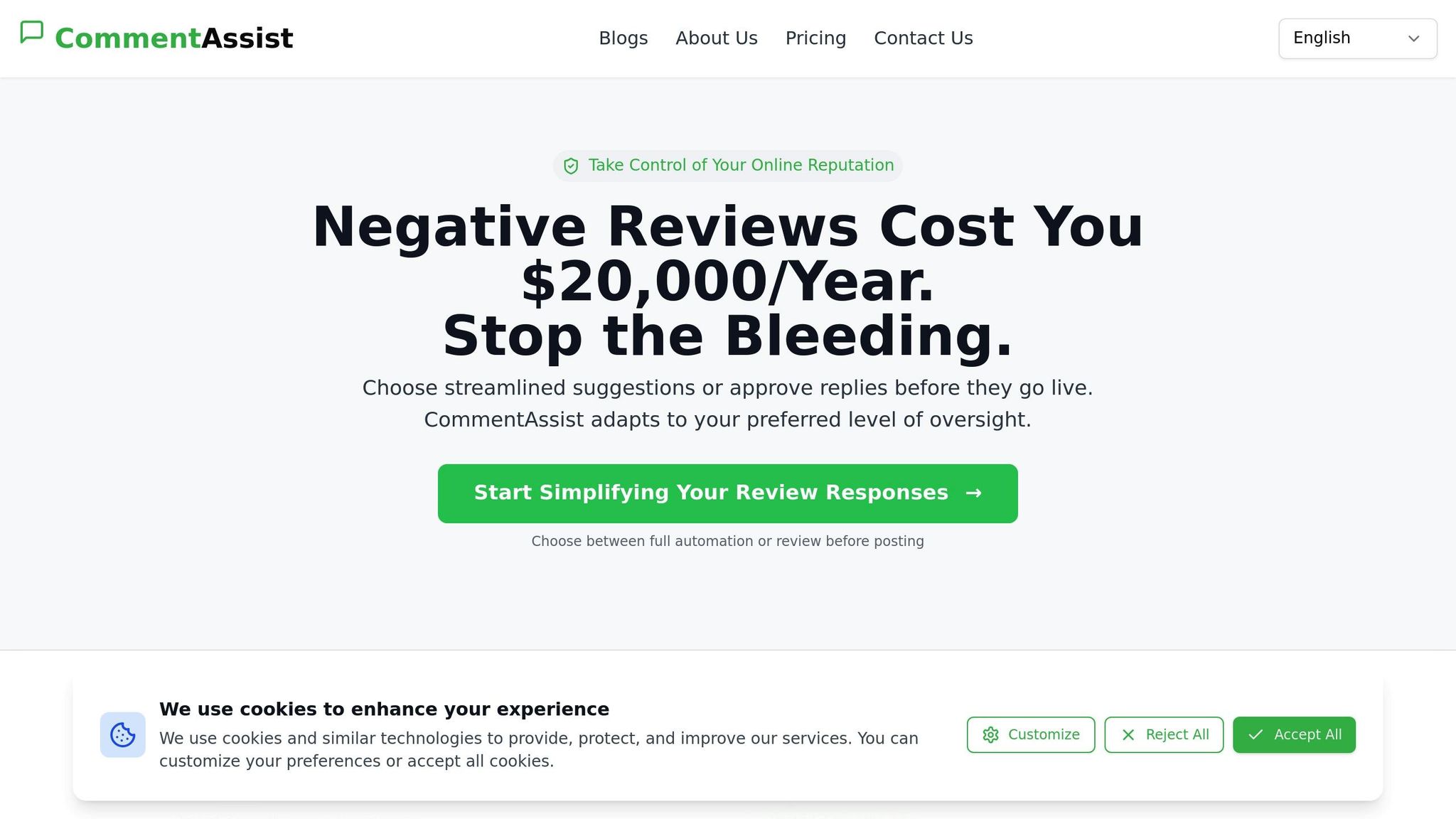
"Choose efficient suggestions or approve replies before they go live. CommentAssist adapts to your preferred level of oversight."
When deciding on a plan, think about your average review volume over the past six months, the number of locations you manage, and whether you need advanced analytics. For businesses with seasonal spikes, it’s smart to account for peak periods to avoid running into limitations during busy times.
Once you've chosen your plan, take full advantage of CommentAssist’s powerful tools to streamline your review management process.
Getting the Most from CommentAssist's Tools
Connect your Google Business Profile to automatically pull in reviews and respond directly from the CommentAssist dashboard. This integration also tracks response times, helping you maintain the quick engagement that customers appreciate.
Analytics dashboards offer valuable insights into your performance. Keep an eye on metrics like average response time (aim for under 24 hours), sentiment trends, and customer satisfaction scores. These insights can help you identify recurring issues, such as frequent complaints tied to specific locations, so you can make targeted improvements.
"Our response time to customer reviews has improved dramatically. The AI suggestions are always on point with our brand values."
– Lisa Patel, Marketing Director at Fashion Forward
Develop response templates tailored to common scenarios like thanking customers for positive feedback, addressing complaints, or resolving delivery issues. Templates should reflect US communication norms, using a friendly yet professional tone that resonates with your audience.
Leverage team collaboration features to assign specific team members to handle certain locations or review types. For example, local managers at a restaurant chain could respond to service-related reviews, while corporate staff handle policy questions.
Expand your reach with multi-platform integration, which goes beyond Google to include Yelp and other review sites popular with US consumers. This centralized system ensures consistency in your brand voice across all platforms and guarantees no review is overlooked. With 24/7 monitoring, you’ll be notified of new reviews as soon as they’re posted.
Continuous Improvement with CommentAssist
To stay ahead, regularly refine your review management strategy. Update response templates every quarter to include new language or address emerging themes. For instance, if customers increasingly mention contactless service or safety protocols, revise your templates to reflect these priorities.
Keep the AI model sharp by consistently reviewing and fine-tuning the automated responses. CommentAssist learns from your edits, improving future suggestions. This is especially useful for businesses in specialized industries where technical precision is critical.
"The AI understands our brand voice perfectly. It's like having a dedicated social media manager at a fraction of the cost."
– David Kim, CEO at Urban Style Boutique
Use performance monitoring to track shifts in customer sentiment and the effectiveness of your responses. Conduct monthly reviews of key metrics to catch trends early. If you notice slower response times or a dip in satisfaction scores, investigate and make necessary changes.
Finally, keep your team up-to-date with staff training on CommentAssist’s features and best practices. Over time, you can adjust the level of automation to suit your needs. Many businesses start by manually approving all responses, then gradually automate replies for routine positive feedback while maintaining human oversight for complex or negative reviews. This balanced approach ensures efficiency while preserving a personal touch, setting you up for long-term success in managing customer reviews.
Conclusion: Key Takeaways for Balanced Review Responses
Managing your reputation effectively means combining the speed of AI with the sincerity of human interaction. This approach not only streamlines operations but also ensures the personal connection that U.S. brands and their customers value.
Here's what the data reveals: actively responding to reviews can boost revenue by an average of 12%, speed up AI-assisted replies by 20%, and enhance customer advocacy by up to 16%. In fact, businesses that excel in this area can see revenue increases of up to 25%.
AI tools are particularly great at addressing routine positive reviews and ensuring every comment gets a reply. This is critical given that 53% of customers expect businesses to respond to negative reviews within a week, yet 63% report they never hear back. For businesses, this gap is a golden opportunity to stand out by implementing a consistent and thoughtful review response strategy.
Of course, while speed and efficiency are important, authenticity matters just as much. Human oversight is crucial for handling complex situations, negative feedback, or emotionally sensitive reviews. Many successful companies use AI to draft responses but rely on human review for delicate cases. This ensures responses align with their brand's values and don’t feel robotic or impersonal.
Tracking performance is essential to improving your strategy. Metrics like average response time, customer satisfaction scores, and sentiment trends provide valuable insights into what’s working and where you can improve. By regularly monitoring these areas, you can fine-tune your approach based on real-world results. A scalable system makes it easier to put these insights into action.
Platforms like CommentAssist are designed with this balance in mind, offering solutions that work for both small businesses managing a handful of reviews and large enterprises handling thousands. The key is to start with a system that grows with your needs, adjusting automation levels as you learn what resonates best with your customers.
One final statistic to keep in mind: 57% of consumers avoid businesses that ignore negative reviews. In today’s competitive landscape, responding thoughtfully to reviews isn’t just good practice - it’s a necessity. It builds trust, shows accountability, and turns customer feedback into a powerful tool for long-term growth.
FAQs
What’s the best way to balance AI and human input when managing customer reviews?
Businesses aiming to strike the right balance between AI and human input for managing customer reviews can rely on AI tools for routine tasks while reserving human involvement for nuanced or sensitive situations. For instance, platforms like CommentAssist can create customized response suggestions that reflect your brand’s voice. These suggestions can then be reviewed and approved by a human before being posted.
By combining AI efficiency with human oversight, businesses can save time, maintain consistency, and still keep that all-important personal touch. This thoughtful approach not only streamlines operations but also builds trust and improves customer satisfaction.
What features should I look for in an AI tool to ensure it matches my brand's tone and meets customer expectations?
When selecting an AI review response tool, it's crucial to ensure it aligns with your brand's voice and resonates with your audience. Look for tools that let you adjust tone, style, and messaging to match your brand's personality. Features like smart suggestions tailored to your preferences can help keep your responses consistent and on-brand.
It's also important to choose a tool that offers flexibility. For instance, having the option for full automation or manual review before publishing gives you control over the final message while still streamlining the process. This balance between efficiency and customization helps ensure your responses reflect your brand identity and meet customer expectations.
How can I track the success of my review response strategy and adjust it as needed?
To gauge how well your review response strategy is performing, keep an eye on crucial metrics such as customer satisfaction, review ratings, and your overall online reputation. Tools like CommentAssist can be a big help here, as they use AI to spot trends and extract insights from customer feedback.
Make it a habit to regularly analyze this data. Look for patterns or areas where you can do better, and tweak your response templates, tone, or approach accordingly. Ensuring your responses align with your brand's voice while addressing customer concerns effectively is key. Staying flexible and open to adjustments will help keep your strategy on point as time goes on.