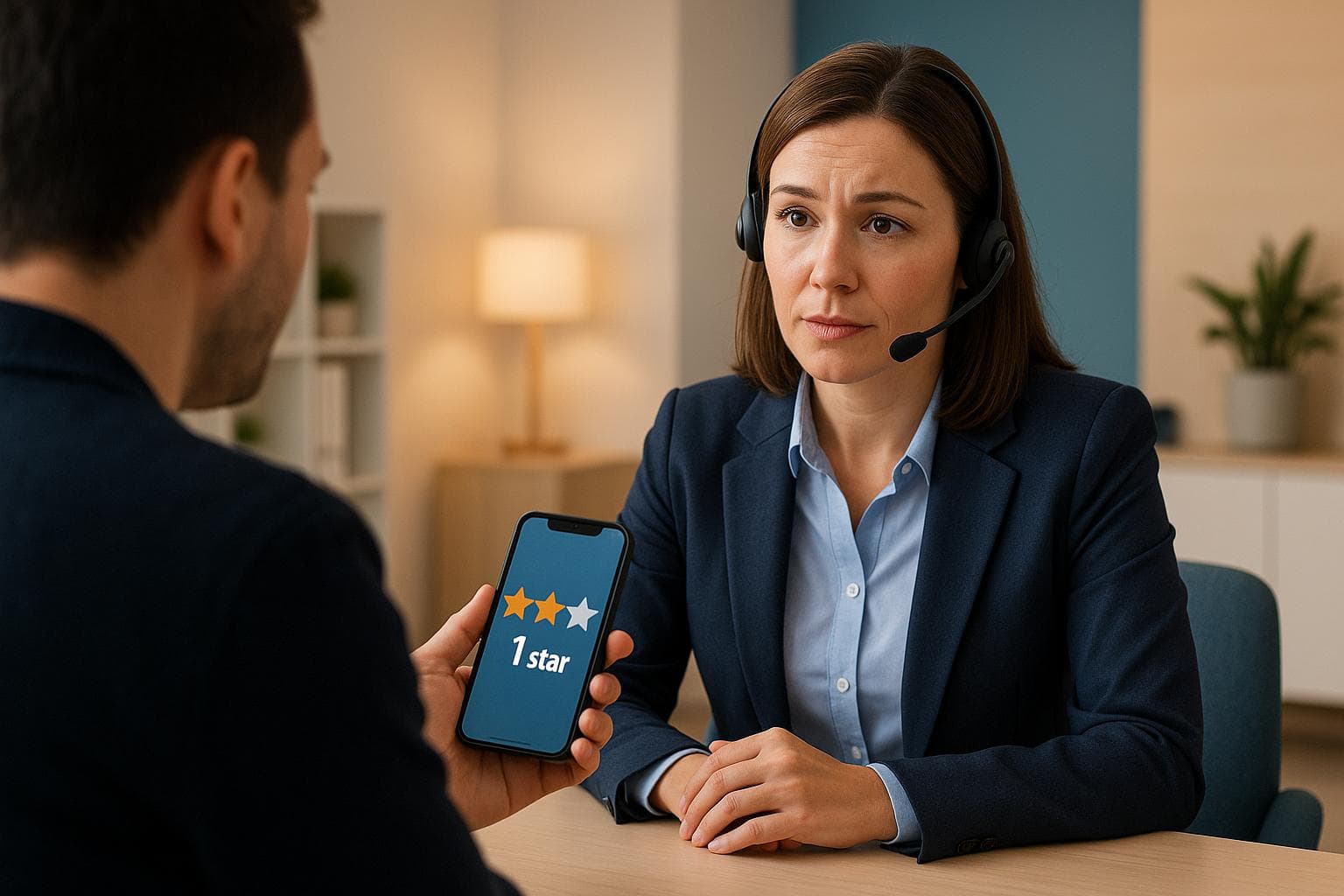
Negative reviews can damage your business in several ways, from lost sales to a tarnished reputation. They influence customer behavior, drive potential buyers to competitors, and increase pressure to lower prices. But the good news? You can minimize their impact and even turn them into opportunities for growth.
Key Takeaways:
- Lost Sales: Poor reviews discourage new customers and hurt repeat business.
- Reputation Damage: Negative feedback erodes trust and can harm employee morale.
- Behavioral Shifts: Customers may demand discounts or avoid your business entirely.
- Amplified Impact: Social media and online platforms magnify the reach of bad reviews.
Solutions:
- Respond Quickly: Address complaints within 24 hours to show you care.
- Encourage Positive Reviews: Ask satisfied customers to share their experiences.
- Use Tools: AI tools like CommentAssist can streamline review management.
- Learn from Feedback: Identify patterns in complaints and fix recurring issues.
- Train Your Team: Use reviews to improve customer service and communication.
Negative reviews are unavoidable, but how you handle them can make all the difference. By addressing issues promptly and learning from feedback, you can protect your reputation, retain customers, and even improve your business.
How Negative Reviews Hurt Your Brand (and What You Can Do About It)
The Real Costs of Negative Reviews
Negative reviews can hurt your business in ways that are both obvious and more subtle. While it’s clear when a bad review turns a potential customer away, the hidden consequences often go unnoticed until they’ve already caused serious damage. Let’s break down these costs to understand their true impact.
Direct Costs: Lost Sales and Customer Loss
Negative reviews can hit your sales hard by driving potential customers away. Studies show that people are less likely to choose businesses with poor online ratings. For industries like restaurants, bad reviews can lead to fewer reservations and, in some cases, even force closures. Service-based businesses also feel the sting, with fewer inquiries and declining revenue.
On top of lost sales, a damaged reputation often means you’ll need to spend more on advertising to rebuild trust. This creates an additional financial strain as you work to win back customers who may already have written you off.
Hidden Costs: Reputation Damage and Lost Trust
The ripple effects of negative reviews go beyond immediate sales - they can chip away at your reputation and the trust you’ve built with your customers. As bad feedback piles up, even your most loyal customers might start to second-guess their decision to stick with your business. This can lead to fewer repeat purchases and shorter, less dependable customer relationships.
There’s also an internal toll. Negative reviews can lower employee morale and make it harder to attract top talent, as your brand image takes a hit. Fixing these issues requires time, effort, and money. You may need to encourage satisfied customers to leave positive reviews and address the root causes of the complaints.
In some cases, businesses face higher costs for crisis management or even legal fees if they need to handle public relations disasters. Over time, these challenges could push you to compete on price instead of quality, creating a downward spiral that further erodes customer satisfaction and profitability.
How Negative Reviews Change Customer Behavior
Negative reviews can have a profound impact on how customers perceive and interact with your business. When potential buyers come across bad feedback, their behavior often shifts in ways that directly affect your revenue and reputation. These reviews shape opinions, discourage engagement, and amplify both immediate and hidden costs.
Lower Purchase Intent and Customer Avoidance
Negative reviews act as a major roadblock for potential customers. Studies repeatedly show that people are quick to avoid businesses with poor ratings, even if they were initially drawn to the product or service. A single bad review can feel like a warning sign, steering customers toward competitors instead.
When bad reviews start to pile up, they create a pattern that’s hard to ignore. This is especially tough for small businesses that depend on local customers. A few critical reviews can be enough to push potential clients toward other options.
Another challenge is that negative feedback increases price sensitivity. Even if customers decide to move forward with your business, they may expect discounts or extra perks to counterbalance their concerns. This puts pressure on you to compete on price rather than quality, which can erode profit margins and weaken your market position.
Timing also plays a critical role. If a potential customer encounters bad reviews early in their decision-making process, they’re more likely to remove your business from consideration altogether. On the other hand, if they see negative feedback after forming a positive impression, they might still proceed but with tempered expectations and a sharper eye on your performance. And as these individual reactions ripple outward, the influence of negative reviews spreads further.
Negative Word-of-Mouth and Social Sharing
The impact of bad reviews isn’t confined to the review platform itself. Customers who see negative feedback often share it with their friends, family, or social media networks, magnifying the damage. This creates a snowball effect, where one bad review can influence dozens - or even hundreds - of potential customers.
Social media plays a key role in amplifying these effects. Negative posts tend to attract more attention than positive ones, generating higher engagement through comments, likes, and shares. A single negative experience shared on social platforms can quickly reach people who might never have seen the original review, broadening its influence.
This amplification ties into the psychological principle of loss aversion - the tendency for people to focus more on avoiding losses than achieving gains. Because of this, one bad review can overshadow multiple positive ones in a customer’s mind. When negative feedback spreads through trusted sources like friends or family, it carries even more weight, making it harder for your business to recover.
In professional settings, the stakes are even higher. A bad review shared within industry groups or professional networks can damage your reputation and close doors to future opportunities. For service-driven businesses that rely heavily on referrals, this can be particularly damaging.
The rapid spread of negative feedback across platforms makes it incredibly difficult to manage or control the narrative. Once shared, it takes on a life of its own, reaching audiences far beyond your direct influence.
sbb-itb-5375359
How to Handle and Reduce Negative Review Impact
Negative reviews can feel like a heavy blow, but with the right approach, you can not only reduce their impact but also turn them into opportunities to improve. The secret? Respond quickly, tackle issues before they snowball, and use the right tools to keep your online reputation in check.
How to Respond to Negative Reviews
Timing is everything. Responding to negative reviews within 24 hours shows customers that you value their feedback and are serious about resolving their concerns. Delays, on the other hand, can make the situation worse, leaving an impression that you don’t care.
When replying, use a professional yet sincere tone. Be specific about how you’ll address the issue - vague responses like “We’ll do better” won’t cut it. Instead, outline clear actions, whether it’s offering a refund, scheduling a follow-up service, or revising internal processes. Invite the customer to continue the conversation privately via phone or email. This keeps the back-and-forth off public platforms and demonstrates to others that you’re proactive about resolving problems.
It’s important to remember that your response isn’t just for the unhappy customer - it’s for everyone else who reads it. Potential customers will judge how you handle criticism, and a thoughtful, solution-oriented reply can actually enhance your reputation.
Preventing Negative Reviews Before They Happen
The best way to deal with negative reviews? Stop them before they’re written. Proactive communication and early problem-solving go a long way in keeping customers satisfied.
Start by implementing follow-up systems. After a purchase or service, send a quick email asking about the customer’s experience. Make it easy for them to reach out directly if something went wrong. Many customers are willing to give you a chance to fix things privately if they feel heard and valued.
Keep an eye on recurring issues. Regularly monitor service quality and track common complaints. Addressing these patterns early can prevent the same problems from cropping up again and again.
Finally, encourage happy customers to leave positive reviews. Send review requests to those who’ve had good experiences, and include direct links to your preferred platforms. By building a strong base of positive feedback, you can ensure that occasional negative reviews don’t overshadow your overall reputation.
Using AI Tools Like CommentAssist for Review Management
Managing reviews across multiple platforms can be a daunting task, especially as your business grows. This is where AI tools like CommentAssist come in handy. These tools streamline review management by automating monitoring, generating customizable response templates, and providing analytics to identify trends early.
With CommentAssist, you don’t have to manually check platforms like Google Business Profile or Yelp every day. The tool sends notifications when new reviews appear, allowing you to respond promptly without constant vigilance.
For larger businesses, the team collaboration features are a game changer. Multiple team members can access the platform, with role-based permissions ensuring the right people handle specific types of reviews. Managers can oversee responses, while front-line staff take care of routine acknowledgments. This ensures consistent, efficient review management across the board.
How to Turn Negative Reviews into Business Growth
Negative reviews can be a goldmine of insights - if you know how to use them. Instead of viewing criticism as a setback, think of it as a guide to uncover areas where your business can improve. Companies that thrive are the ones that see these reviews not as problems to fix but as opportunities to grow.
Identify patterns to address recurring issues. Negative feedback often highlights operational weak spots, like slow shipping or unclear product descriptions. If you notice multiple customers raising the same concern, that's a clear sign of a pattern that needs attention. Each complaint is essentially free market research, pointing out exactly where your business is falling short.
To tackle this, set up a simple tracking system to organize feedback into themes. For example, group complaints under categories like product quality, delivery times, or customer service. Once you've identified the most common issues, focus on resolving the ones that will have the greatest impact on customer satisfaction. Fixing recurring problems not only improves your business but also reduces the likelihood of similar complaints in the future.
Turn critics into advocates through personal engagement. Reaching out directly to unhappy customers can transform their perception of your business. When you take the time to listen and genuinely resolve their issues, you show how much you value their experience. This personal touch often turns critics into loyal supporters.
Whether it’s a phone call, a personal email, or even an in-person meeting for local customers, go the extra mile. Share the specific improvements you’ve made based on their feedback, and don’t be afraid to showcase these changes publicly. This transparency builds trust and highlights your commitment to customer satisfaction.
Use real feedback to train your team. Negative reviews can be incredibly effective training tools for your staff. Instead of relying on generic scenarios, use actual customer complaints to teach employees how to handle similar issues in the future. This approach makes training more relevant and helps your team understand the real-world impact of their actions on customer experiences.
Create better resources to prevent future complaints. Sometimes, negative reviews stem from misunderstandings. If customers frequently struggle with using your product or grasping your policies, take action. Update your blog, FAQs, or instructional videos to address these pain points. Clearer documentation and accessible information can reduce confusion and prevent similar complaints down the line. Plus, this positions your business as both proactive and customer-focused.
Measure the impact of your improvements. Once you’ve made changes, track how they affect your business. For example, if you’ve addressed shipping delays, monitor whether complaints about delivery times decrease. If you’ve improved product quality, keep an eye on return rates. This data not only validates your efforts but also helps you prioritize future improvements that deliver the best results.
The key to turning negative reviews into growth is to see them as opportunities rather than setbacks. By addressing complaints thoughtfully and using them to refine your operations, you can strengthen your business, improve your products, and build lasting customer relationships. Instead of just extinguishing fires, use the flames to forge something better.
Conclusion: Main Points for Handling Negative Reviews
Negative reviews don’t have to be the end of the world for your business. When handled thoughtfully, they can actually become opportunities to strengthen your reputation and improve customer trust.
To effectively manage negative reviews, stick to a few key practices. Always respond promptly and professionally. Acknowledge the customer’s concerns, take responsibility if appropriate, and offer a clear path to resolve the issue. This doesn’t just help the dissatisfied customer - it also sends a strong message to potential buyers that you value feedback and are committed to making things right.
The best strategy, however, is prevention. By keeping an eye on feedback trends, refining your products or services based on customer input, and maintaining open communication channels, you can address potential issues before they escalate into negative reviews. Tools like CommentAssist can simplify this process by automating review tracking and ensuring consistent, polished responses.
FAQs
How can I turn negative reviews into opportunities to improve my business and build customer trust?
Negative reviews, while often unwelcome, can actually serve as a powerful tool for growth - if you approach them the right way. Instead of seeing them as setbacks, view them as insights into areas where your business might need improvement. The key is to respond quickly and professionally. Acknowledge the customer's concerns, offer a genuine apology, and propose a solution. This demonstrates that you value their feedback and are committed to providing a better experience.
But don't stop there. Use the feedback to make meaningful changes to your processes, ensuring similar issues don't arise again. If possible, take the extra step of following up with unhappy customers to confirm their concerns have been resolved. This not only shows that you care but might even encourage them to update their reviews. By handling negative feedback constructively, you can transform challenges into opportunities to build trust and strengthen customer loyalty.
How can I reduce the chances of receiving negative reviews?
To reduce the chances of receiving negative reviews, focus on providing top-notch customer service and setting clear expectations. Make sure your team is not just attentive but also responsive, showing customers that their satisfaction truly matters. Open and honest communication plays a big role here - offer thorough and accurate details about your products or services, including any possible limitations or delays, so there are no surprises.
It's also essential to make it simple for customers to voice concerns directly. Provide multiple ways to get in touch, like phone, email, or live chat, so they can share feedback or resolve issues privately instead of turning to a public review. By addressing their needs promptly and thoughtfully, you can often turn a potential complaint into a positive experience.
How does responding promptly to negative reviews benefit my business's reputation and customer trust?
Addressing negative reviews quickly shows that your business genuinely values customer opinions and is dedicated to resolving issues. Taking the time to respond thoughtfully can help rebuild trust with unhappy customers while signaling to potential customers that you care about their experiences.
A prompt and considerate reply also helps safeguard your business’s reputation. It reflects accountability and professionalism, which can leave a positive impression on others. In many cases, handling criticism well can transform a negative experience into an opportunity to strengthen customer relationships and improve your services.